yomi
manga
Serving 5M+ manga reads daily.
Built from scratch — designed to handle real traffic at scale. Not a content site. A high-traffic system built with performance as the primary constraint.

A platform designed for scale from day one.
yomimanga is a manga reading platform built to deliver a fast, seamless experience — even under heavy traffic.
Unlike most platforms in the space, it was designed with performance as the primary constraint, not an afterthought.

Most manga platforms struggle with performance.
Slow load times, broken reading flows, and infrastructure that collapses under traffic spikes.
Existing platforms were built to serve content — not to handle millions of concurrent requests gracefully.
"They're built like content sites — not high-traffic systems."

I approached this as a systems problem, not a product problem.
The goal wasn't just to display manga — it was to build a platform that could handle millions of requests, stay fast under load, and deliver a reading experience that respects the art.
Every architectural decision was made through one lens: what happens when this gets 10x more traffic?
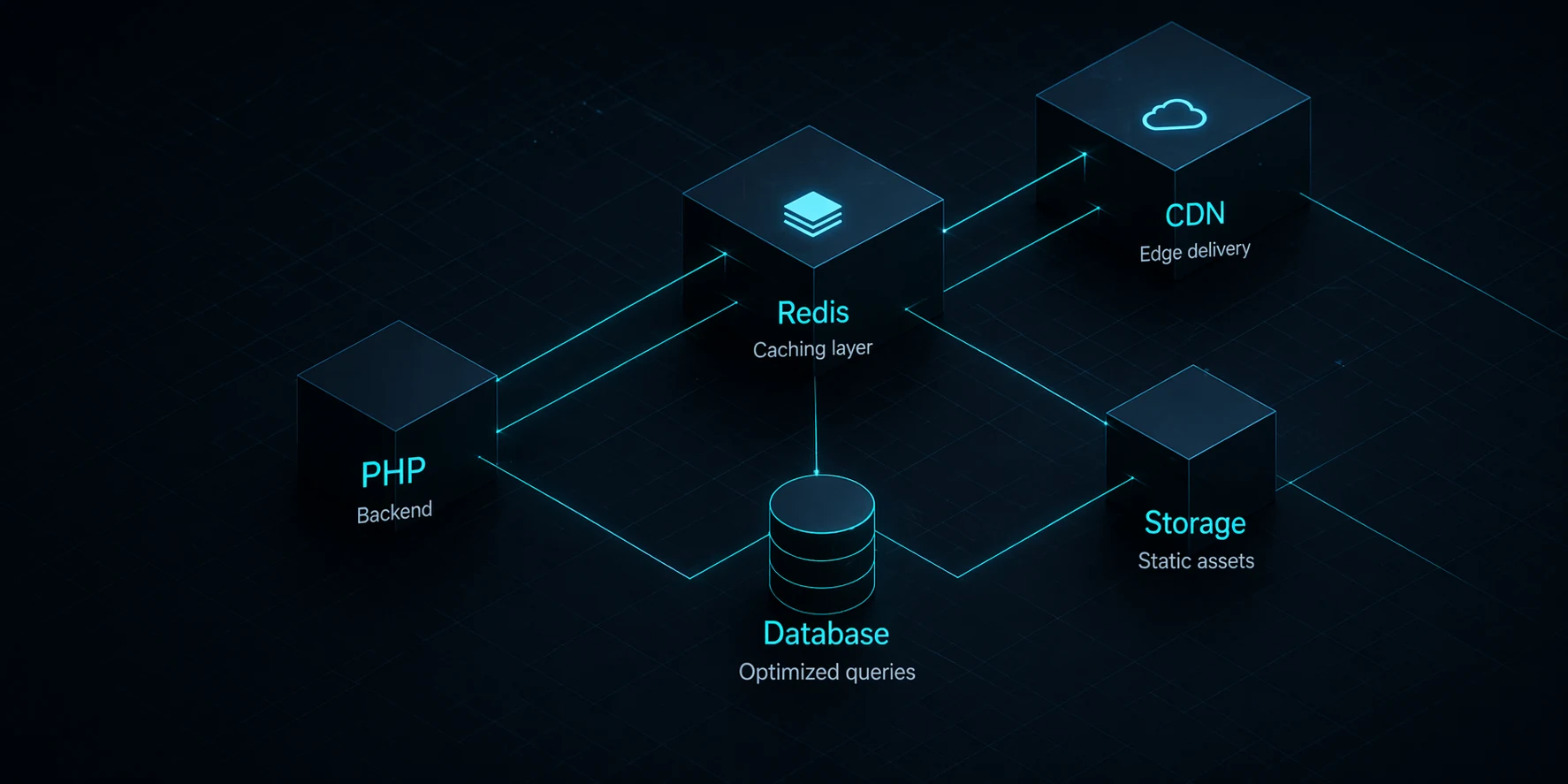
Performance-first, from the ground up.
Every layer of the stack was chosen and tuned for speed, reliability, and scale. No wasted steps, no default configurations.
- PHP backend — optimized for high concurrency
- Redis — aggressive caching layer
- CDN — static assets served at the edge
- Database — every query reviewed and tuned

Scaling isn't about adding more — it's about removing bottlenecks.
Getting to 5M+ daily requests didn't happen at launch. It required continuous optimization cycles driven by real usage data.
- Aggressive caching strategies tuned to real request patterns
- Database query profiling and index optimization under load
- Infrastructure adjustments based on peak traffic analysis
- Monitoring and alerting before users notice degradation

The decisions that made the difference.
- Prioritize performance over feature complexity at every decision point.
- Design for caching from the start — not as an afterthought.
- Optimize for real user behavior, not assumptions or benchmarks.
- Iterate based on live traffic data, not theory.

Building at scale changes how you think about systems.
yomimanga reinforced one core idea: performance is a product decision, not a technical afterthought.
Building and maintaining a system at this scale solo meant learning to make decisions with incomplete information, prioritize ruthlessly, and optimize based on real signals rather than assumptions.
"Real-world systems don't break because of missing features — they break because they weren't designed for usage."